
Competitor Google Ads Campaigns for Car Dealerships: How to Set One Up and What to Expect
- David
- Apr 22
- 4 min read
When someone searches "ABC Ford," there's a good chance they don't care whether they end up at ABC Ford or Bob Ford. A competitor campaign is a Google Ads campaign built on that gap: bid on a rival's name, show up when their customers search, and give them a reason to choose you instead.
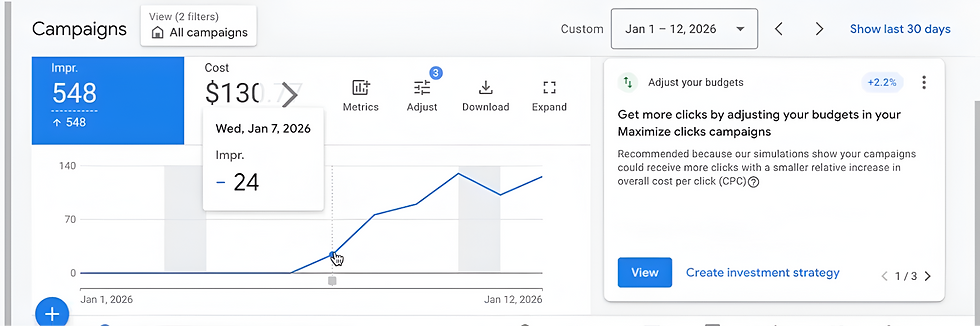
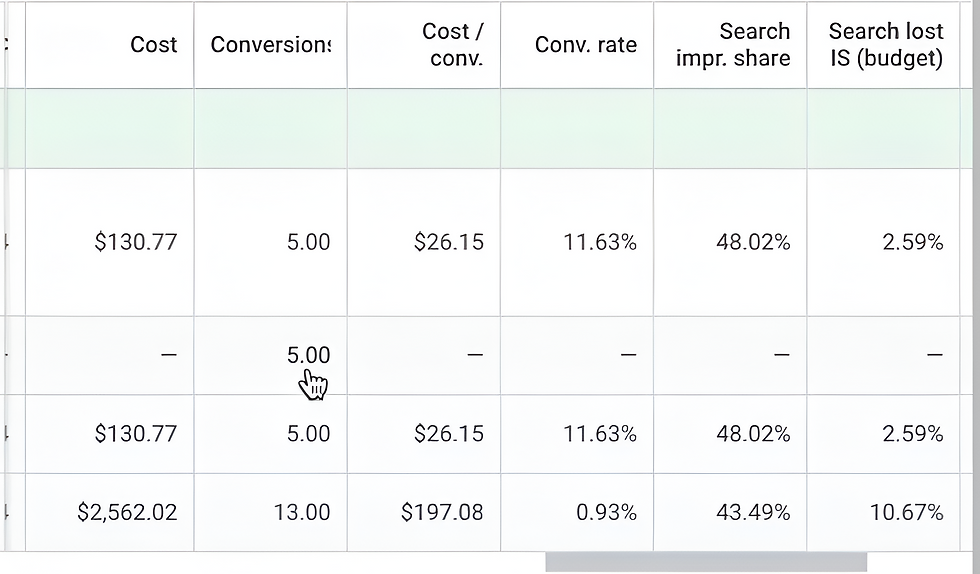
For a client of ours, that looked like five form submissions in five days at $26 per lead, on a minimal daily budget.
Here's exactly how it was structured, why it worked, and how to replicate it.
How to Run a Competitor Campaign
Before launching, you need to have four things in place, and conversion tracking needs to be verified before any of them matter.
If you can't confirm that form submissions and calls are being tracked accurately, you won't know whether the campaign is working. Set it up, test it, and verify it before the campaign goes live.
1. Decide what you want to own. Do you want to own a specific dealer's name or an area? That distinction should drive which dealerships you go after and how you structure the campaign.
2. Build a differentiated offer. Searchers already have a dealership in mind when they type that name. Your ad needs to give them a specific, credible reason to reconsider. That means knowing what your store does better or differently and leading with it.
3. Write ad copy that reflects your brand positioning. This is where most competitor campaigns succeed or fail. The copy needs to answer one question: why should someone who just searched for our competitor choose us instead? A generic value proposition won't cut it. The ad has to speak directly to what that competitor's potential customer cares about.
4. Verify your search terms before and after launch. Inside Google Ads, go to Insights & Reports and pull the search terms report. This confirms you're buying the terms you actually intend to buy and helps you catch irrelevant queries before they drain your budget.
What to Budget for a Competitor Campaign
A starting budget of $15–$20 per day is reasonable for a competitor campaign.
At an average CPC of around $3, that's roughly 5–7 clicks per day, which is enough to gather meaningful data without significant spend. This campaign generated approximately one form submission per day. That's a workable baseline for assessing whether the campaign is producing results and whether it's worth scaling.
How to Tell If It's Working
Form submissions are what you're looking for. If someone filled out a form on a sales-focused dealership website, they didn't land there by accident; they engaged enough to take action. Although many people track phone calls, we wouldn’t recommend doing that. Phone calls are harder to read. Sure, the callers could be buyers, but they could just as easily be someone looking for the competitor's service department number.
Keep an eye on your CPC as you go. Competitor campaigns tend to get expensive—you're bidding on someone else's name, which drives costs up. If yours is staying around $3, that's a good sign the copy is doing its job. If it starts climbing past $4–5, that's your signal to revisit the ad copy and match types before you touch the budget.
Signal | What It Likely Means |
Form submissions | Sales-intent traffic |
Phone calls only | Possible service-intent traffic |
CPC staying low (~$3) | Ad copy is relevant and well-structured |
CPC spiking above $4–5 | Ad copy or targeting needs work |
At 48% search impression share, our campaign wasn't dominating, but it didn't need to. Owning the full share on a competitor's name would cost significantly more. What matters is whether the share you have is converting, and in this case, it was.
Common Competitor Campaign Mistakes
Treating a competitor campaign as a targeting or budget problem. It isn't.
The right target and a sufficient budget are table stakes. What actually determines whether the campaign converts is the ad copy. Bidding on a competitor's name without a differentiated offer just puts your ad in front of someone who already has a dealership in mind and gives them no reason to change it.
Treating a competitor campaign as a sales lead generator.
In some markets, the traffic skews toward service shoppers: people who searched a competitor's name because they're already a customer there and want a phone number or appointment. If you launch and see mostly phone calls with few form submissions, that's likely what's happening. It doesn't mean the campaign failed, but it does mean the expectation and potentially the offer need to be adjusted.
If the competitor you're targeting has strong brand loyalty in your market, impression share and click-through rates may also underperform regardless of copy quality. Market data should drive the targeting decision before any budget is committed.
Next Steps
If you're already running Google Ads, pull your search terms report today. Competitor queries may already be triggering your ads without a structured campaign behind them, which means you're paying for that traffic without the copy or offer to convert it. And if you want help structuring a competitor campaign for your market, reach out here.



Comments